AC Leak Water Damage in St. Petersburg, FL
Air conditioners run hard in a humid subtropical climate, and a clogged condensate drain or a cracked pan can spill into a closet, a hallway or the ceiling below. The technician finds the wet path and the drying team removes soaked insulation and dries the structure.
(888) 621-2041Ceiling stain under the AC? Call the crew- Condensate overflow cleanup
- Wet insulation removal
- Ceiling moisture mapping
- LGR dehumidifiers
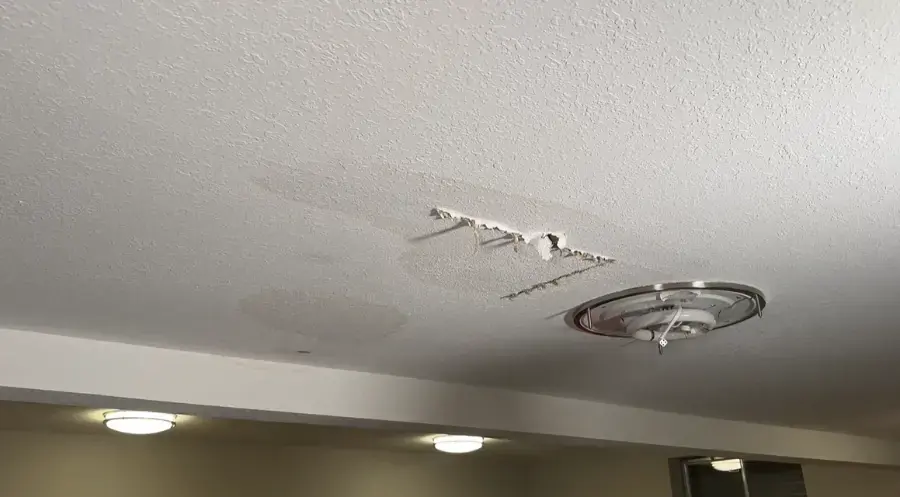
Early moves when the air conditioner leaks
- 1
Turn the system off
Switch the thermostat and the air handler breaker off so the unit stops producing more condensate.
- 2
Clear the pooled water
Soak up what sits in the closet or pan with towels or a wet vacuum, taking care around outlets.
- 3
Check the ceiling
Look for brown stains, bulges or drips below the unit, and keep people away from sagging areas.
- 4
Take photos
Capture the unit, the pan and every stain before anything is dried, then call the crew.
How AC water reaches the rest of the house
Condensate water travels down through the attic, the ceiling or the closet floor, soaking insulation on the way. The technician checks the vertical path with meters, since stains show only the lowest point.
- Water category
- Category 1, though pan water that stood for days can slip to Category 2.
- Typical class
- Class 2, with ceiling and wall tops wet.
- Equipment
- Air movers, LGR dehumidifiers and ceiling cavity drying tools.
- Drying goal
- Insulation, drywall and framing back to the dry reference.
A leaking air conditioner rarely floods a room all at once. The drain backs up, the pan fills and the water drips for days until a ceiling stain appears. In a warm, humid climate like the one around Tampa Bay, a unit can run most of the year, so a slow leak has plenty of time to soak insulation and drywall before anyone looks up. Because the symptoms appear in a ceiling or a closet, owners often blame the roof first, which delays the right fix.
Where AC leak water ends up
- Closet floors and baseboards around the air handler
- Attic insulation that holds water against the ceiling drywall
- Ceiling drywall below, which stains, bulges or softens
- Wall tops where the closet shares framing with a hallway
- Flooring near the closet, especially plank and engineered wood
AC dripping into a ceiling? Ask the crew about drying.
(888) 621-2041Call the crewWhy wet insulation comes out
Insulation soaked by condensate stays wet for a long time and keeps its water against the ceiling above. The crew removes it and opens the ceiling section when needed, so the cavity can dry fully instead of leaving damp material to sag and stain again. Insulation that stays damp also loses its value as a thermal barrier, so replacing it is part of the repair even when the drywall survives.
Dealing with the unit
The air conditioner itself belongs to an HVAC technician, who clears the drain, checks the pan and tests the float switch. The restoration crew handles the water side and asks that the unit stay off until it is ready, so new condensate does not feed the drying area. Coordinating both trades keeps the leak from starting again. A moisture map taken before and after drying shows both trades what changed.
If the ceiling above has already softened, see ceiling leak water damage for the opening and drying steps. A drain that clogs once will clog again, so a cleaned drain and a working float switch are worth discussing with the HVAC technician. Pooled water on a closet floor calls for water extraction first.
What does AC leak water damage cost in St. Petersburg, FL?
AC leak water damage in St. Petersburg commonly runs $500 to $4,500 or more. A closet overflow caught quickly costs the least, while a leak that stained ceilings and floors in several rooms costs the most. The crew sets the figure after readings.
Closet floor overflow
$500 to $1,400
- Floor extraction
- Baseboards dried
- Short drying run
Stained ceiling below
$1,400 to $3,000
- Insulation removed
- Ceiling opened
- Air movers and LGR
Rooms below wet
$3,000 to $4,500+
- Ceilings and walls
- Flooring affected
- Longer drying
The size of the stain, how long the unit leaked and whether insulation and flooring were soaked drive the price. Opening a ceiling adds labor and equipment days. Try your own figures in the Palmetto water damage cost calculator.
How AC leak water damage is handled in St. Petersburg
- 1
Switch off and trace
The technician confirms the unit is off and traces the water from the pan to the lowest wet point.
- 2
Remove soaked material
Wet insulation and any softened ceiling section are taken out so the cavity can dry.
- 3
Dry in place
Air movers and dehumidifiers work on drywall, framing and flooring near the closet.
- 4
Check and release
Readings are logged each visit, and equipment leaves when targets are met.
Coverage across St. Petersburg, FL
The St. Petersburg water damage pros work across the city, from Downtown St. Petersburg and the Grand Central District to Shore Acres, Snell Isle, Riviera Bay, Roser Park and Pasadena, covering every ZIP code listed below.
Browse the full Palmetto coverage listAC leak questions in St. Petersburg
Why does an AC unit leak water?
The usual cause is a clogged condensate drain, but a cracked pan or a failed float switch can also spill water. An HVAC technician finds the cause.
Is AC water clean?
It usually starts as clean condensate, but water that sat in a pan or soaked insulation can pick up debris and is handled with care.
Will the ceiling need to be replaced?
Only the soaked part. Small stains can sometimes be dried in place, while sagging or softened drywall is cut out and replaced after drying.
How long does drying take?
Closet and ceiling leaks often dry in three to five days. Heavy insulation or flooring involvement adds more.
Does homeowners insurance cover an AC leak?
It depends on the policy, how long the leak ran and whether the discharge was sudden. Photos and moisture logs help the carrier assess it.
Should the unit stay off?
Yes, until an HVAC technician fixes the drain, since a running unit keeps adding condensate to the wet area.
Can mold grow from an AC leak?
Wet insulation and drywall that stay damp can support mold, which is one reason the crew removes soaked material and dries the cavity instead of waiting.
AC leak in St. Petersburg? Call for drying
The extraction crew pulls up the water, removes wet insulation and dries the ceiling and closet area to documented readings.