Ceiling Leak Water Damage in Palmetto, FL
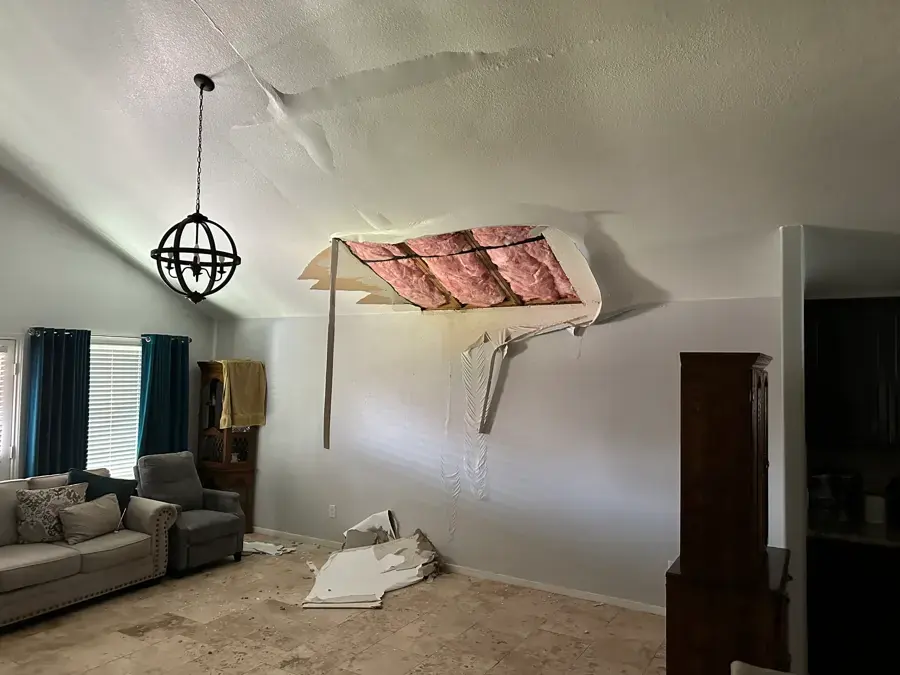
A leaking shower pan upstairs, a supply pipe in the attic or a neighbor's overflow in a condo can bring water through the ceiling. The restoration team traces the source, drops sagging drywall safely and dries the joist bays and walls below.
(888) 621-2041Ceiling sagging? Phone right away- 24/7 ceiling leak help
- Safe drywall removal
- Joist bay drying
- Electrical safety first
What to do when water comes through the ceiling
- 1
Find the shutoff
Close the main or the valve for the fixture above, and in a condo alert the unit upstairs.
- 2
Power off the room
Switch off the breaker for ceiling lights and fans in the wet area.
- 3
Stay out from under it
A ceiling holding water can fall without warning; move people and pets away.
- 4
Photograph and protect
Photograph the ceiling and move furniture, then set out buckets and towels.
Water above a ceiling spreads along the joists
Ceiling drywall acts like a tray. Water runs along joists and pools at low points, so the wet area above is usually bigger than the stain below.
- Water category
- Category 1 from supply pipes; Category 2 or 3 from drains or toilets
- Typical class
- Class 3 when water came from above
- Equipment
- Thermal imaging, pinless meters, air movers, LGR dehumidifiers, containment
- Drying goal
- Joists, drywall and wall tops within 2 to 4 points of a dry reference
Ceiling leaks in Palmetto come from inside the house more often than from the roof. Two-story homes and condos along the river have bathrooms, laundry rooms and water heaters above finished ceilings, and single-story slab homes often run supply pipes through the attic. A failed shower pan, a toilet seal, a washer hose or a pinholed pipe sends water down through the ceiling drywall.
Where ceiling leaks start in Palmetto homes
- Shower pans and tub drains in second-floor bathrooms.
- Supply pipes and water heaters in attics above slab homes.
- Laundry rooms and toilets in the unit above, in condos and townhomes.
- Ceiling light fixtures, where water collects around the electrical box.
Water stain spreading overhead? Get the ceiling checked before it drops.
(888) 621-2041Phone about a ceiling leakTaking a wet ceiling down safely
Electricity comes first: lights and fans in the wet area are switched off at the breaker. The tech who does the walkthrough then maps the ceiling and walls with thermal imaging and meters. Where drywall sags or holds water, the crew drains and removes it in a controlled way rather than letting it fall. Firm drywall wet with clean water is often dried in place. Water from a drain or toilet is Category 2 or 3, so those materials are removed and the joists are cleaned and treated.
Drying joists and walls
Air movers aim into the opened ceiling, LGR dehumidifiers pull moisture from the room, and the tops of walls below are checked because water runs down inside them. The crew logs readings daily until joists and drywall match a dry reference.
If the source is the air conditioner, see AC leak water damage; if it is the roof, see roof leak water damage. The EPA mold cleanup page explains the 24 to 48 hour drying window, and the Department of Energy Energy Saver pages cover attic insulation that may need replacing after a leak.
What does ceiling leak water damage cost in Palmetto, FL?
In Palmetto, FL, ceiling leak water damage restoration typically runs $700 to $5,500, not counting the plumbing repair. A small stain dried in place sits at the low end; a collapsed ceiling over several rooms sits at the high end.
Small stain
$700 to $1,800
- Ceiling dried in place
- Moisture mapping
- Short drying
Section removed
$1,800 to $3,800
- Drywall drained and removed
- Joist bay drying
- Wall tops checked
Collapsed or multi-room
$3,800 to $5,500+
- Large ceiling removal
- Contents protected
- Longer drying
The drivers are the source and water category, how much ceiling got wet, whether it collapsed and how soon drying began. Try your own figures in the Palmetto water damage cost calculator.
How ceiling leak water damage is handled in Palmetto
- 1
Make it safe
Power to the wet area goes off and the leak source is stopped.
- 2
Map above and below
Thermal imaging traces the water along joists and down into walls.
- 3
Drain and remove
Sagging drywall is drained and taken down; firm drywall stays to dry.
- 4
Dry the joist bays
Air movers and LGR dehumidifiers run until readings meet the dry reference.
Coverage across Palmetto and northern Manatee County
The Palmetto restoration crew works from downtown and Riviera Dunes out to Snead Island, Terra Ceia and the Artisan Lakes area, ZIP codes 34221 and 34220, and the same drying standard applies in Bradenton, Longboat Key, Sarasota, St. Petersburg, Gulfport.
Browse the full Palmetto coverage listCeiling leak water damage questions in Palmetto
Is a sagging ceiling dangerous?
Yes. Drywall holding water can fall suddenly and the light fixtures in it may be energized. Keep clear and switch off the breaker.
Should I poke a hole to drain the ceiling?
Only if water is clearly pooling and you can do it safely from the side with a bucket below. Otherwise leave it to the crew.
Can a wet ceiling be dried without replacing it?
Often, when the drywall is firm and the water was clean. Sagging, soft or contaminated drywall comes out.
Who pays when the leak came from the condo above?
That depends on the association documents and each owner's policy. Coverage depends on your policy, so it is worth checking with your own insurer.
How long does a ceiling take to dry?
Usually three to five days once the source is fixed. Removed sections dry faster because air reaches the joists.
What if the water came from a toilet?
Toilet water is Category 2 or 3, so ceiling drywall and insulation it soaked are removed and the joists are cleaned and treated.
Water coming through a Palmetto ceiling?
The restoration team stops the spread, removes sagging drywall safely and dries joists and walls to a verified reading.