Structural Drying in Palmetto, FL
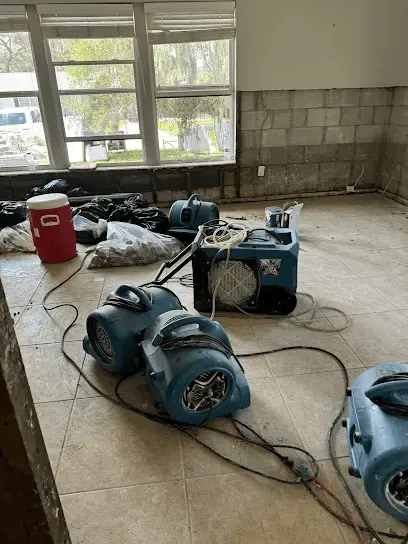
Surfaces dry fast; block walls, framing and slab do not. The drying team maps moisture, sizes air movers and dehumidifiers to the class of loss and logs readings daily until every wet material matches a dry reference.
(888) 621-2041Need the house dried right? Phone- 24/7 drying setup
- Psychrometric logs
- LGR and desiccant units
- Dry reference goal
What to do before the drying equipment arrives
- 1
Keep the AC on
If power is safe, run the AC to start pulling humidity out of the air.
- 2
Close the house
Keep windows and doors closed; humid outdoor air slows drying in Palmetto.
- 3
Clear the floor
Move furniture and contents out of wet rooms so equipment can be placed.
- 4
Leave walls as they are
Let the moisture map decide what is opened or removed.
Drying is measured, not guessed
The IICRC S500 standard sets the drying goal by comparing wet materials to a dry reference of the same material in the same building.
- Water category
- Any, after Category 2 or 3 cleaning and treatment
- Typical class
- Class 1 to 4, which sets how much equipment a room needs
- Equipment
- Air movers, LGR dehumidifiers, desiccant dehumidifiers, drying mats, thermal imaging
- Drying goal
- Within 2 to 4 points of a dry reference material
Structural drying is the part of a water loss that decides whether trouble comes back later. In Palmetto, the materials that hold water longest are the ones most homes are built from: concrete block walls, slab floors and the wood framing and furring against them. The outdoor air is humid most of the year, so drying depends on controlling the air inside.
How the drying team sets up a Palmetto dry-out
- Moisture mapping with thermal imaging and meters marks every wet wall, floor and ceiling.
- The class of loss, 1 to 4, sets how many air movers and dehumidifiers each room needs.
- Air movers sit at the room's evaporation load; LGR dehumidifiers pull that moisture out of the air.
- Desiccant dehumidifiers and drying mats handle dense Class 4 materials like slab and wood floors.
Walls still damp after the water is gone? Get them dried to a verified reading.
(888) 621-2041Phone about structural dryingDaily readings and the drying goal
Each day, the crew records temperature, relative humidity and grains per pound inside and outside, plus moisture readings on each wet material. Equipment is adjusted as drying progresses. The job is done when wet materials read within 2 to 4 points of a dry reference, not when they feel dry.
Drying usually follows water extraction, and after floodwater it follows storm and flood cleanup. The EPA mold cleanup page explains why drying within 24 to 48 hours matters, and the EPA indoor air quality pages cover moisture control indoors.
What does structural drying cost in Palmetto, FL?
In Palmetto, FL, structural drying typically runs $1,000 to $8,500, depending on how many rooms are wet, the class of loss and how many equipment days the materials need.
One or two rooms
$1,000 to $2,800
- Class 1 or 2
- Air movers and LGR
- Three to five days
Several rooms
$2,800 to $5,500
- Class 2 or 3
- More equipment
- Wall cavity drying
Dense materials
$5,500 to $8,500+
- Class 4 slab or wood
- Desiccants and mats
- Longer drying
The drivers are the class of loss, the square footage, the materials involved, the indoor humidity and how soon drying began. Try your own figures in the Palmetto water damage cost calculator.
How structural drying is handled in Palmetto
- 1
Map moisture
Thermal imaging and meters mark every wet material and set the dry reference.
- 2
Size the equipment
Air movers and dehumidifiers are placed to match the class of loss.
- 3
Log daily
Psychrometric and moisture readings are recorded and equipment adjusted.
- 4
Verify dry
Equipment comes out when materials meet the dry reference.
Coverage across Palmetto and northern Manatee County
The Palmetto restoration crew works from downtown and Riviera Dunes out to Snead Island, Terra Ceia and the Artisan Lakes area, ZIP codes 34221 and 34220, and the same drying standard applies in Bradenton, Longboat Key, Sarasota, St. Petersburg, Gulfport.
Browse the full Palmetto coverage listStructural drying questions in Palmetto
What is structural drying?
Drying the building itself, framing, block, slab, drywall and subfloor, to a measured goal, not just the surfaces you can see.
What is a dry reference?
An unaffected piece of the same material in the same building. Wet materials are dry when they read within 2 to 4 points of it.
Why does my house still smell damp?
Usually because wet materials remain. Readings find them, and drying continues until they meet the goal.
Can I just open the windows?
In Palmetto, outdoor air is often more humid than indoor air, so open windows can slow drying. Closed rooms with dehumidifiers dry faster.
How long does structural drying take?
Three to five days for most Class 1 or 2 losses; dense materials take longer. The readings decide.
Why are there so many machines?
The class of loss sets how much evaporation and moisture removal each room needs, and the equipment is sized to match.
Need a Palmetto home dried right?
The drying team maps moisture, sizes the equipment and logs readings daily until every wet material meets the dry reference.