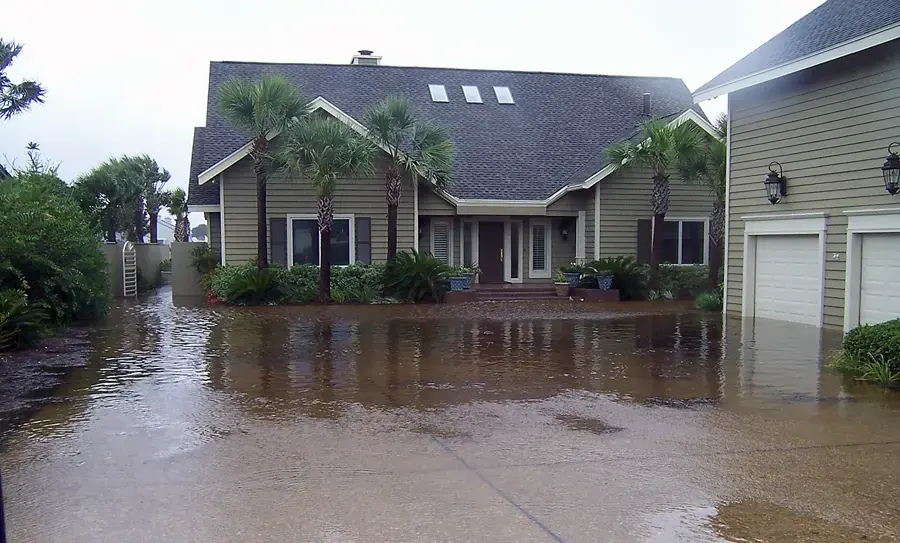
Hurricane Helene's storm surge on September 26, 2024, flooded the Marina District, downtown businesses and surrounding homes in Gulfport. Floating docks washed up Beach Boulevard. For a shop or a house that took that water, the cleanup is not the same as a roof leak or a plumbing failure.
Key takeaways
- Surge from Boca Ciega Bay is salty, contaminated flood water and is handled as Category 3.
- About one third of Gulfport lies in the FEMA 100 year floodplain, so surge risk is not limited to a few streets.
- Extraction comes first, then removal of porous materials, cleaning, and drying to readings.
- Salt residue damages metal, wiring and electronics, so surfaces are cleaned and not only dried.
- Flood zone repairs go through the city's Substantial Improvement and Substantial Damage review, so records matter.
What Helene did in Gulfport
Helene's surge on September 26, 2024, flooded the Marina District, downtown businesses and surrounding homes. NOAA put its Tampa Bay surge 2.3 feet higher than Hurricane Elena's in 1985.
Elena had brought tides six to seven feet above normal. Floating docks washed up Beach Boulevard in Helene, a sign of how far the water reached.
Idalia in August 2023 had also left downtown and the Marina District flooded. Two events in just over a year show that this is not a one time risk.
The storm history goes back further. Hurricane Irma in 2017 destroyed 17 transformers and left about 85 percent of the city without power for about a week, with flooding along Boca Ciega Bay and where storm sewers backed up.
Passing storms such as Elsa in 2021 and Ian and Nicole in 2022 brought high tides, limited surge and heavy rain. Gulfport has seen water more than once, so the cleanup steps are worth knowing in advance.
Why Gulfport floods
Gulfport is a city in Pinellas County that borders St. Petersburg, South Pasadena and Boca Ciega Bay. About one third of the city lies in the FEMA 100 year floodplain, and the Flood Insurance Rate Map was revised on August 24, 2021.
Elevations run from sea level to three feet along parts of the waterfront up to nearly forty feet in the northeast of the city. The low edge is where surge arrives first.
The city blames flooding on an inadequate storm sewer system, low ground and salt water backing up through storm sewers from high tides of Boca Ciega Bay. Runoff in heavy rain reaches Boca Ciega Bay, Clam Bayou and the Gulf of Mexico.
- Low waterfront ground close to Boca Ciega Bay
- Salt water pushing back up storm sewers at high tide
- Heavy rain runoff that cannot drain quickly
Why surge water is salty and Category 3
Surge is bay water pushed inland. It carries salt, silt, fuel, debris and waste picked up along the way. Restoration crews treat it as Category 3.
Salt is the extra problem. It stays on surfaces after the water is gone, attracts moisture and corrodes metal, wiring and electronics. A surface can look dry and still hold salt that keeps drawing water out of the air.
The storm and flood cleanup page explains how flood water is sorted and treated in Gulfport.
A day one plan for a home or shop
The first steps are about safety, proof and stopping further damage. Power is the first concern.
A few extra points apply to shops on the waterfront.
- Keep a list of stock by shelf and photograph each one
- Unplug electronics and registers and leave them off
- Move paper records to high ground
- Save the landlord's and insurer's contact details
Homes
Stay out of standing water if the panel or outlets may be wet. Photograph the water marks and the contents before moving anything.
Lift small items, pull up wet rugs and keep pets and children away from the water.
- Do not run wet appliances
- Do not use a household vacuum on water
- Keep the receipts for everything
Shops on Beach Boulevard and Shore Boulevard
The Beach Boulevard waterfront village has shops, restaurants and bars. A shop owner should photograph stock and fixtures, move dry items up and call the landlord and insurance carrier.
The commercial water damage page describes phased drying for a business.
Extraction, removal and drying
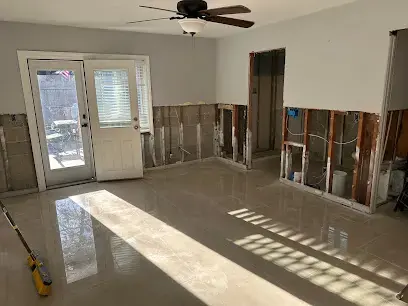
The water extraction work starts with pumps and truck mounted extraction. Deep water comes out first, and then the floor is worked.
Porous materials that soaked in surge water usually come out: carpet, pad, insulation and drywall that wicked water above the floor. Hard surfaces are rinsed to remove salt, cleaned and treated.
- Water is pumped and extracted
- Wet pad, carpet and soft drywall are removed
- Surfaces are cleaned to remove salt and silt
- Equipment dries the structure
- Readings are taken before rebuilding
Salt and electronics
Salt does not leave with the water. It stays on wiring, outlets and appliance parts, and it can cause shorts and corrosion days or weeks later. An electrician should look at wet outlets and the panel before power is restored.
Surface cleaning with fresh water and a cleaner removes much of the salt. Items that cannot be cleaned are discarded.
Permits and the 50 percent rule
After Helene and Milton, the city applies the FEMA 50 percent rule and requires a Substantial Improvement and Substantial Damage review for repairs in flood zones.
By December 2024 the city issued minor repair permits for electrical, HVAC and plumbing, with nearly 200 permits in review and more than 200 Substantial Damage letters sent.
That review depends on records. Photos of the water marks, drying logs and invoices all help show the extent of the damage. A dry house with clear readings is also easier to rebuild.
The Gulfport hub lists the other water services in the city.
What to keep
Keep photos and video taken before and during cleanup. Keep a list of damaged contents, the drying log and every invoice.
Save copies of any letters from the city. Those letters can affect permits and repair plans.
Written records are the best protection when repairs are reviewed. A neat folder, kept in one place, saves time when the city or an adjuster asks questions.
Take a few extra photos once the area is clean. Those show the finished condition and the work that was done.
- Photos of water marks, taken before cleanup
- The drying log with dates and readings
- Invoices for extraction, removal and drying
- A list of damaged contents and their rough value
- Every letter from the city, including any Substantial Damage letter