Structural Drying in Gulfport, FL
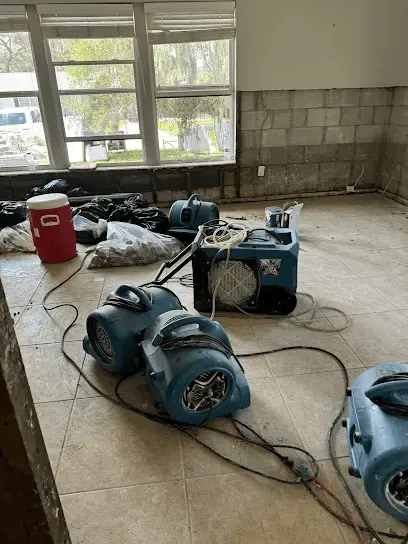
Homes flooded by Hurricane Helene needed drying before repair, and flood-zone repairs go through the FEMA 50% rule assessment. The drying team places equipment by material, reads moisture daily and keeps equipment running until the structure reaches its dry goals.
(888) 621-2041Walls still damp after the water is gone? Call- LGR dehumidifiers
- Desiccant drying
- Wall cavity systems
- Daily meter readings
What to know before drying equipment arrives
- 1
Keep doors closed
Closing off the wet zone helps the dehumidifiers work on the right air and speeds drying.
- 2
Leave the equipment alone
Turning units off early can restart wet conditions, so keep them running until told otherwise.
- 3
Keep the AC on
If the system is dry and safe, steady indoor temperatures help drying move along.
- 4
Save the readings
Daily numbers prove progress and support the claim file.
How structural drying is controlled in Gulfport
Drying is a science of air, heat and time. The crew chooses equipment by material and class, places it to move moisture out of dense layers and measures progress every visit.
- Water category
- Set by the source, clean for a pipe and Category 3 for flood
- Typical class
- Class 2 or 3, rising to Class 4 for slab and wood
- Equipment
- LGR and desiccant dehumidifiers, air movers, cavity systems
- Drying goal
- Each material at its dry standard on the meter
Pulling the water out is only half of the job. Framing, subfloor, slab and drywall hold moisture long after the surface looks dry, and structural drying removes it on a schedule. In Gulfport, many homes flooded by Hurricane Helene needed this step before any repair work could start. Drying that stops too soon leaves damp framing behind, which is why the numbers, not the calendar, decide the finish.
What controls how long drying takes
- Material type, since wood and concrete release water slowly
- How deep the water went into walls and floors
- Indoor temperature and humidity during the work
- Whether contaminated materials were removed first
- How well the equipment is placed around the wet zone
Walls or floors still wet in your Gulfport property?
(888) 621-2041Call the drying teamThe equipment choices
Air movers sweep moisture off surfaces, while LGR dehumidifiers pull it from the air. Desiccant units suit dense or cool materials, and wall cavity systems dry enclosed space without tearing it all open. The crew adjusts the setup as readings show what is stalling.
Hardwood floors, plaster and concrete all hold moisture longer than carpet or drywall. For those materials the crew may add desiccant units or mats and run the equipment for longer, measuring until the reading stops falling.
Why records matter after a flood
The city requires a Substantial Improvement and Substantial Damage assessment for flood-zone repairs after storms such as Hurricane Helene, and it had sent more than 200 Substantial Damage letters by December 2024. Daily moisture logs and a final dry report help owners show the condition of the structure.
See storm and flood cleanup for the earlier phases.
Equipment choices are adjusted as readings come in. If one wall lags behind, the crew moves air or adds cavity drying there instead of simply waiting.
Humidity matters as much as airflow. Dehumidifiers keep indoor air dry enough to pull moisture out of materials, so doors and windows stay closed while the equipment runs and the crew checks the air as well as the walls.
What does structural drying cost in Gulfport, FL?
Structural drying in Gulfport typically runs from $1,000 for one or two rooms to $8,500 or more for dense materials. The equipment count, the class of water and the number of drying days drive the total cost.
One or two rooms
$1,000 to $2,800
- Class 1 or 2
- Air movers and LGR
- Three to five days
Several rooms
$2,800 to $5,500
- Class 2 or 3
- More equipment
- Wall cavity drying
Dense materials
$5,500 to $8,500+
- Class 4 slab or wood
- Desiccants and mats
- Longer drying
Material density, the number of rooms and the days equipment stays on site decide the total, with daily readings deciding when it ends. Try your own figures in the Palmetto water damage cost calculator.
How structural drying is handled in Gulfport
- 1
Map moisture
Readings are taken across floors, walls and framing to set a clear baseline for the job.
- 2
Place equipment
Air movers and dehumidifiers are sized to the wet volume and the materials involved.
- 3
Monitor daily
Each visit records new readings and adjusts the placement of equipment.
- 4
Finish with proof
The crew removes equipment only once readings match the dry standards.
Coverage across Gulfport, FL
Crews work across the whole city, from the Beach Boulevard waterfront and the Clam Bayou area to the higher ground in the northeast, covering ZIP codes 33707 and 33711 and every street in between.
Browse the full Palmetto coverage listStructural drying questions in Gulfport
Why can't I just open the windows?
Coastal humidity can be high, so open windows may add moisture instead of removing it.
Why are so many fans needed?
Air movement lifts moisture off surfaces, and each wet zone needs enough flow to work.
How do you know when drying is done?
Moisture meters compare wet materials with dry reference readings from the same building.
Is the equipment loud?
Yes, but it is the quickest way to prevent further damage, so it stays on until the job is done.
Does drying prevent mold?
Proper drying removes the moisture that growth needs, which is why readings are checked daily.
Can wet insulation inside a wall be dried?
Sometimes. Dense or paper-faced insulation holds water, and the crew may remove it, then dry the cavity with panels or air before the wall is closed.
Will my power bill go up while equipment runs?
Yes, drying equipment draws steady power for several days. The crew sizes the setup to what the job needs, and the written log can support a claim for the added cost.
Structural drying in Gulfport, measured daily
The drying team places equipment by material, tracks readings and finishes only when each layer reaches its dry goal.