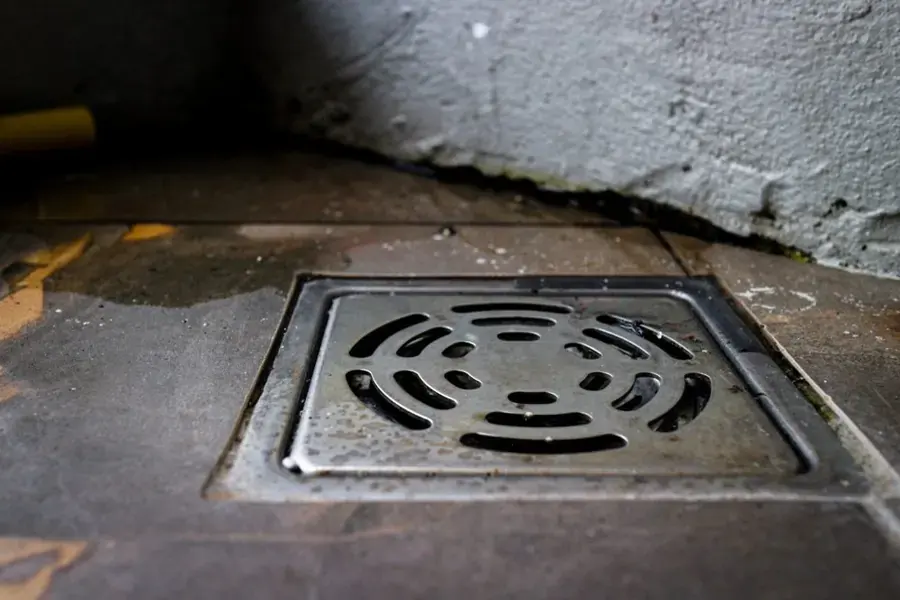
When sewage comes up through a floor drain or a toilet, the first question is where the blockage is. In St. Petersburg, that question has legal weight. City code Section 8-169 makes property owners responsible for maintaining and repairing their private sewer laterals.
Key takeaways
- The lateral is the pipe that carries waste from a home to the city sewer, and city code makes the owner responsible for the private part.
- A backup that affects one home points toward the lateral. A backup that affects neighbors points toward the city sewer.
- Sewage is Category 3 water. Stop using water, keep people and pets out, and have porous materials removed.
- The city has a Private Lateral Rehabilitation Rebate Program for eligible single family homeowners.
- Cleanup and repair are separate jobs. The lateral is fixed by a plumber, and the damage is cleaned by a restoration crew.
What a private lateral is
A lateral is the pipe that carries waste from a building to the sewer main. The part on private property belongs to the owner.
City code Section 8-169 makes property owners responsible for maintaining and repairing their private sewer laterals. That means a clog, a crack or a root intrusion on that pipe is the owner's to repair.
The city runs its own utility services, including water and the sewer system. The main in the street is the city's concern, and the lateral is the owner's.
Laterals are usually buried and out of sight, so problems build up quietly. Tree roots can grow into a joint, grease and wipes can catch on a rough spot, and an old pipe can crack or sag.
Any of those can turn a slow drain into a full backup.
Lateral problem or city main problem
It is not always easy to tell. A few clues help, and a plumber with a camera can confirm.
A plumber with a camera can run it through the pipe and show the exact point of the problem.
The video also shows whether the blockage is on the private side or at the connection to the main, which matters for who has to repair it.
- Only one home has a backup, while neighbors have normal service, which points to the lateral.
- Several homes on the same street back up at once, which points to the main.
- The lowest fixture, such as a floor drain or a first floor tub, backs up first.
- A backup that starts after heavy rain can point to water entering the system or to a saturated lateral.
- A clog that returns after clearing can mean a crack or a root inside the pipe.
Why wet ground makes backups worse
In 2024, overflowing private laterals caused thousands of gallons of wastewater to discharge during saturated conditions. When the ground is full, water leaks into cracked pipes and the system fills faster.
The city has worked on the problem. After Hurricane Hermine in 2016, it discharged partially treated sewage into the bay during storms, and it then launched a $305 million sewer and drainage overhaul with extra holding tanks and emergency injection wells.
It has also spent over $11 million on cured in place pipe lining of sewers and set aside $1 million a year for more.
Lift Station 85, the city's largest, stands on the former Albert Whitted property and holds about 10 million gallons in its storage tanks.
What to do when sewage comes up
Sewage is Category 3 water. It carries bacteria and should not be touched with bare hands.
Immediate steps
Stop using water in the home. Every flush and every drain sends more waste into the backup.
Keep children and pets away, and avoid walking through wet areas in bare feet.
- Do not run the washing machine or dishwasher
- Do not use bleach on the floor, which can react with other cleaners
- Photograph the area before cleanup begins
Calls to make
Call a plumber to inspect and clear the lateral. Call a restoration crew to extract and clean. Tell the insurance carrier as soon as possible.
If neighbors have the same problem, tell the city utility about the suspected main issue.
How the cleanup is done
The sewage backup cleanup page explains the work in detail. The core steps are below.
- Standing sewage is extracted and the area is isolated with containment
- Porous materials such as carpet, pad and soft drywall are removed and discarded
- Hard surfaces are cleaned and treated with an antimicrobial
- Air scrubbers run while the work is under way
- The structure is dried and readings are taken before rebuilding
Cabinets, drywall and flooring
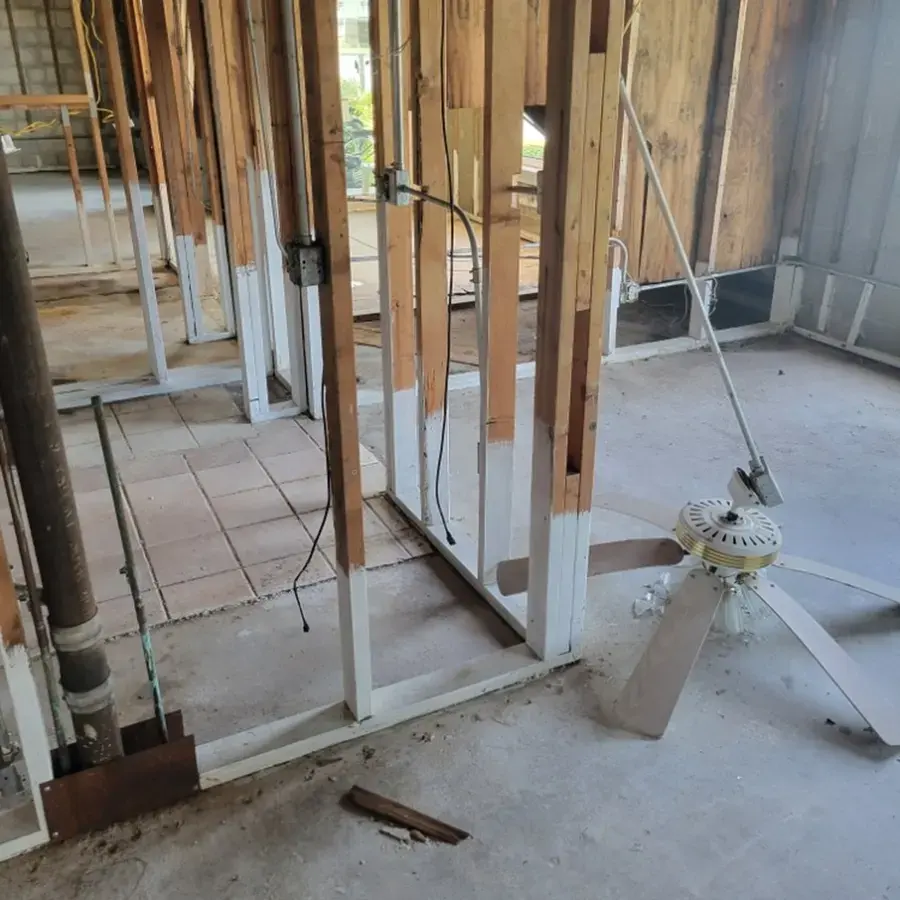
Sewage wicks into drywall and cabinet bases, so the wall is cut above the wet mark and the cabinet toe kick is opened. Tile and sealed floors can be cleaned and treated. Carpet and pad that touched sewage are removed.
Everything removed is bagged and carried out, and the area is cleaned before any drying equipment is placed.
Toilet overflow versus a sewage backup
A toilet overflow from a clog in the bowl is often a smaller event. The toilet overflow cleanup page covers overflow water and how it is sorted by category.
If waste is coming up in more than one fixture, or in a floor drain, the problem is further down the pipe. That is a lateral or main problem, and it needs a plumber.
A few signs help sort the two.
- One toilet overflows and the other fixtures work: usually a clog at that toilet
- A tub or floor drain bubbles when a toilet flushes: the problem is further down the pipe
- Several fixtures back up together: a lateral or main blockage
- Water that smells of sewage in a drain with no recent use: a possible pipe failure
Repair, rebate and records
The city runs a Private Lateral Rehabilitation Rebate Program. It gives eligible single family homeowners a one time rebate for inspecting and repairing a private sewer lateral. Eligibility and the steps to apply come from the city.
Keep the plumber's report, the camera video and the invoices. They support both the rebate and the insurance claim.
The St. Petersburg hub lists the other water services for the city.
The rebate is one time and aimed at eligible single family homeowners. Whether a rental, a condo or a business qualifies is a question for the city.
Timing matters for cleanup. The longer sewage sits in carpet and drywall, the further it soaks and the harder it is to treat.