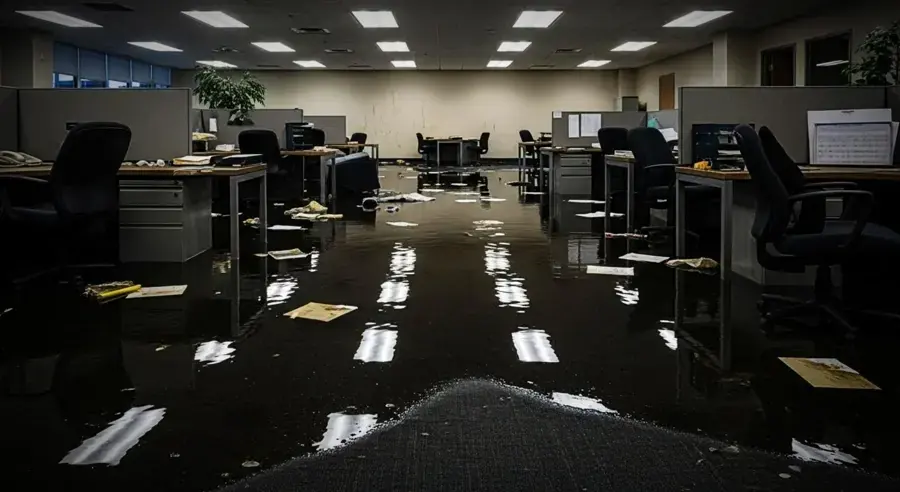
St. Armands Circle is a shopping and restaurant district on St. Armands Key. When Helene pushed surge through the coastal areas in September 2024, the Circle was still flooded the afternoon after the storm. It was several feet underwater after Helene and Milton.
Key takeaways
- Surge water in a shop or restaurant is Category 3, so porous materials are removed and hard surfaces are cleaned and treated.
- Extraction and safety come first, then inventory triage, then phased drying so each area of the building can be released.
- Photograph the inventory, fixtures and water marks before moving anything.
- Tenants and landlords should agree early on who handles drywall, flooring, ceilings and contents.
- Drying is finished when readings match the dry standard, not when the floor looks clean.
What surge did on the Circle and the keys
The city limits of Sarasota include the barrier islands Lido Key, St. Armands Key and Bird Key. The city said coastal areas of Sarasota had over 4 feet of storm surge from Helene, which damaged hundreds of homes and businesses.
St. Armands Circle was still flooded the afternoon after Helene, and Benjamin Franklin Drive on Lido Key was covered in sand.
Milton passed on October 9, 2024, with winds near 120 mph, and the Circle was several feet underwater after the two storms.
For a retail space, that means water at the floor, the walls and sometimes the display height.
Why surge water is handled differently
Surge is bay and Gulf water pushed over land. It carries salt, silt, fuel and sewage from drains. Restoration crews treat it as Category 3.
Salt also does damage of its own. It leaves residue on metal and electronics and keeps materials damp. That is why surge cleanup includes cleaning surfaces, not just drying them.
The storm and flood cleanup page explains how this water is handled in Sarasota.
Electronics and registers are especially sensitive. Salt water can leave a point of sale system looking fine, then fail days later, so it should be checked by a technician before it is plugged in.
The first day for a shop or restaurant owner
The owner has to balance safety, the building and the business. These steps keep the order straight.
Utilities come next. Power, water and gas may be off, and refrigeration is the most time sensitive item in a restaurant.
Food that sat in surge water or lost cold for too long is generally discarded, and the safest course is to follow the health department's advice.
- Stay out of the space until the power is confirmed off and the structure is safe.
- Photograph and video the water marks, the fixtures, the inventory and any equipment.
- Move dry stock and papers to high, dry storage and keep a list of what moved.
- Call the landlord or property manager and the insurance carrier, and note the names.
- Do not run wet equipment, cooking appliances or refrigerators until they are checked.
Inventory and contents triage
Not everything in a shop is lost. The category of the water and the material of the item decide what can be cleaned.
Hard goods such as glass, metal and sealed ceramic can often be cleaned and returned to sale. Paper, cardboard, fabric and food that touched surge water are generally discarded.
Keep a list with photos. A shop can lose stock value quickly, and a clear list helps the adjuster and the owner decide what stays.
A simple sorting system helps in the first rush.
- Keep and clean: glass, metal, sealed ceramic and plastic goods
- Check first: electronics, lighting and anything with a motor
- Discard: paper goods, cardboard, fabric, food and anything porous that touched surge
Restaurant equipment
Refrigerators, freezers and cooking equipment that sat in surge water need a technician before they run again. Food stored below the water mark is usually discarded.
Retail fixtures
Shelving, displays and counters made from particle board swell and fall apart. Solid wood, metal and glass fixtures can often be cleaned.
Phased commercial drying
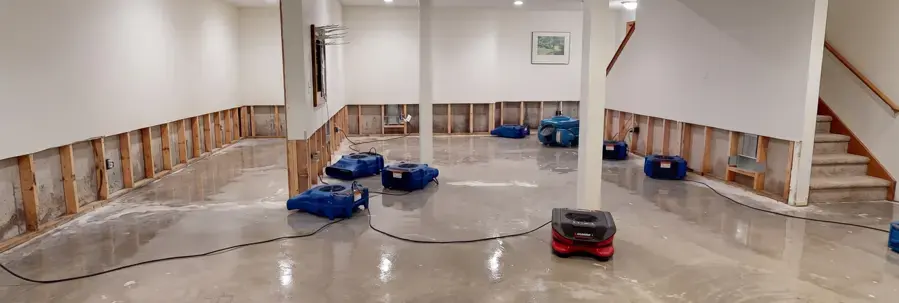
A commercial building is dried in sections so part of it can be released sooner. The commercial water damage page explains the process.
The crew sets up containment where needed, removes wet carpet tile, flooring and drywall, and then places air movers and large dehumidifiers. The structural drying page covers how readings are taken until the structure matches the dry standard.
A shop with a back office, a storage room and a front floor can often be released one zone at a time.
- Containment and removal in the worst zone
- Drying equipment placed by zone
- Readings taken and logged on every visit
- Zones released as they reach the dry standard
Ceilings, walls and flooring
Surge that rose several feet leaves a wet mark high on the walls. Drywall is cut above the highest wet reading, and wet ceiling tiles are replaced.
Flooring is the next question. Carpet tile and floating floors usually come up, while sealed tile and concrete can be cleaned, treated and dried in place.
Landlords and neighbors share the building
Shops on the Circle often share walls, ceilings and building systems. Water in one unit can affect the next.
Early contact with the landlord or the property manager keeps repairs consistent. It also settles who will handle the building shell and who will handle the tenant's finishes and contents.
Neighbors drying at the same time share the same schedule pressure, so scheduling matters.
Good questions to ask the landlord or property manager include these.
- Who is handling the shell of the building?
- Who is responsible for the ceiling, walls and flooring?
- Is the building's insurance contact available?
- When can the crew enter the shared spaces?
What the flood program means for owners
Sarasota has applied for flood mitigation money for the area. The $25 million St. Armands Resiliency and Flood Mitigation Program would add pump station retrofits, generators, tide check valves and underground storage.
On August 26, 2026, Sarasota County commissioners approved $13.5 million for St. Armands Key flood prevention and $6.4 million to add 60 acre feet of storage at Celery Fields.
Those projects take time, and they do not remove the need to be ready. A plan for inventory, power and documentation is still the best protection for a business on the Circle.
The Sarasota hub lists the other water services in the city.
Between storms, an owner can prepare in small ways. None of it needs to be expensive.
- Keep a current photo inventory of stock and fixtures
- Store copies of leases, policies and vendor contacts away from the building
- Know where the power shutoff and the water shutoff are
- Raise stock and equipment off the floor where possible
- Agree with the landlord in advance on who calls whom after a flood