Structural Drying in Sarasota, FL
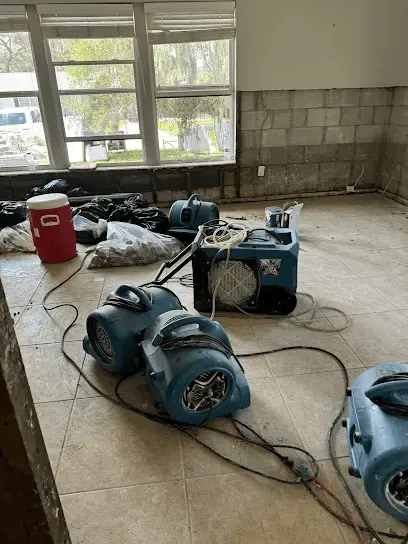
Hot, humid summers slow evaporation, which means a wet wall or subfloor can stay damp far longer than it would in dry air. Structural drying uses air movers, dehumidifiers and daily readings to pull moisture out of framing, drywall and floors until each material reaches its dry standard.
(888) 621-2041Walls or floors still damp? Call the drying crew- Daily moisture readings
- LGR dehumidifiers
- Desiccant drying
- Wall cavity drying
What to do while the structure is still wet
- 1
Keep doors closed
Closed doors and windows let dehumidifiers work on the wet zone instead of the outside air.
- 2
Leave equipment on
Switching drying equipment off early lets materials reabsorb moisture from the air.
- 3
Protect valuables
Move belongings and rugs out of the wet zone and away from running equipment.
- 4
Track the days
Note when the water arrived and when equipment started so the log is complete.
How structural drying is planned and measured
Drying is a physics problem. Heat, air movement and dehumidification pull water out of materials, and readings taken every visit show whether the plan is working or needs more equipment.
- Water category
- Whatever the source was, since drying follows extraction or cleanup
- Typical class
- Class 1 to 4, from one wet wall up to slab, wood or plaster that hold water
- Equipment
- Air movers, LGR dehumidifiers, desiccant units, drying mats and meters
- Drying goal
- Each wet material back to its dry standard, confirmed against unaffected readings
Pumping out the water is only half the job. What remains is inside the structure: framing, drywall, subfloor and slab hold moisture that cannot be mopped away. Structural drying removes it with controlled airflow and dehumidification, which matters in Sarasota, where warm, humid air makes evaporation slow and indoor humidity hard to control. Summer heat indexes regularly top 100 degrees, so the outside air gives a drying room little help.
The four drying classes
- Class 1: a small area with low moisture in dense materials
- Class 2: a whole room of carpet with wet walls partway up
- Class 3: water from above that soaked ceilings, walls and floors
- Class 4: dense materials such as slab, hardwood or plaster
- Equipment is matched to the class, not to the room size alone
Walls damp days after the water was removed? Get them read
(888) 621-2041Request readingsWhy daily readings matter
A room can feel dry while the framing behind it is still wet. Moisture meters and a thermal camera are used on every visit, and the readings are compared with unaffected materials to set the goal. If a wall stalls, the crew adds equipment, opens a small section or adjusts airflow instead of waiting. Equipment leaves as soon as the readings say it can.
Dense materials and slow dry downs
Concrete slabs, hardwood floors and plaster release water slowly, so desiccant units and drying mats may be added to the usual dehumidifiers. Wet insulation in a wall cavity is often removed since it dries poorly. Drying plans also account for hot afternoons and cooler nights, since humidity swings change how fast materials release water. When the source was a leak, see slab leak water damage for concrete specific steps, and after floods see storm and flood cleanup.
A drying job that ends too early invites swelling, odor and repeat damage, so the equipment stays until the meter says dry. A written log of each visit gives the insurance file a clear timeline.
What does structural drying cost in Sarasota, FL?
Structural drying in Sarasota typically costs $1,000 to $2,800 for one or two rooms, $2,800 to $5,500 for several rooms and $5,500 to $8,500 or more when dense materials such as slabs or hardwood are wet. Equipment days drive the price.
One or two rooms
$1,000 to $2,800
- Class 1 or 2 drying
- Air movers and LGR units
- Several equipment days
Several rooms
$2,800 to $5,500
- Class 2 or 3 drying
- More equipment placed
- Wall cavity drying
Dense materials
$5,500 to $8,500+
- Class 4 slab or wood
- Desiccants and drying mats
- Longer equipment stay
Room count, the class of the loss, how dense the wet materials are and how humid the weather stays all change how many equipment days the drying plan needs. Try your own figures in the Palmetto water damage cost calculator.
How structural drying is handled in Sarasota
- 1
Map and classify
Meters and a thermal camera show every wet material, and the loss is classed one through four.
- 2
Place equipment
Air movers, LGR units and desiccants are positioned to a written plan for each room.
- 3
Monitor each visit
Readings are logged, equipment is moved and the plan is adjusted if a material stalls.
- 4
Confirm and remove
Equipment goes only when each material reaches its dry standard.
Coverage across Sarasota, FL
Water damage crews work throughout the City of Sarasota, from downtown and the Rosemary District to Siesta Key and the other barrier islands, including ZIP code 34236 and the US 41 and US 301 business corridors.
Browse the full Palmetto coverage listStructural drying questions
How long does structural drying take?
Most losses need several days, and dense materials or humid weather can add time. Readings decide the finish, not the calendar.
Why are the dehumidifiers so loud and hot?
Dehumidifiers produce heat as they pull water from the air, and air movers run constantly. Both are working to dry materials faster.
Can I turn the equipment off at night?
Doing so slows drying and can let materials reabsorb moisture. If the noise is a problem, the crew can adjust placement.
How do you know when it is dry?
Meters read each material against unaffected reference readings, and the dry standard is met when wet areas match those numbers.
Does humid weather really slow drying?
Yes. Sarasota summer air holds a lot of moisture, so dehumidifiers have to do the work that open windows could not, and the schedule can run longer.
Is drying the same as repair?
No. Drying returns materials to a safe moisture level, while repair and rebuilding such as drywall and paint comes afterward.
What does drying cost?
Ranges depend on room count and materials, and each visit's readings and equipment days go into the written scope for the claim.
Walls and floors still wet after cleanup?
The drying team handles structural drying across Sarasota, matching equipment to each room and keeping readings until walls, floors and slabs reach the dry standard.