Structural Drying in Bradenton, FL
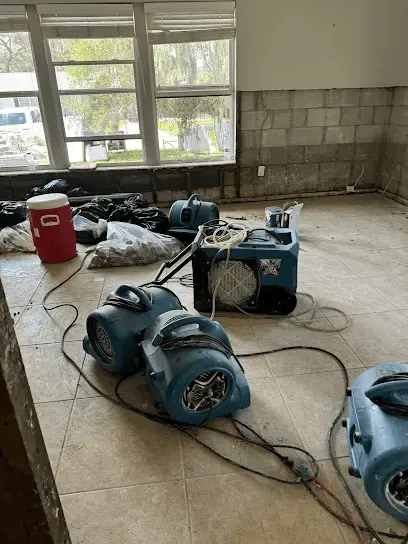
Bradenton's humid subtropical climate slows drying, so wet walls and framing need controlled equipment and readings, not open windows. The crew sets dehumidifiers and air movers, then tracks moisture on every visit until the structure is dry. Each material is checked against its own target.
(888) 621-2041Wet walls in Bradenton? Call for drying- LGR dehumidifiers
- Air mover placement
- Daily moisture logs
- S500 drying standard
What to do before drying equipment arrives
- 1
Keep windows shut
In humid weather, open windows let in moist air that works against the dehumidifiers.
- 2
Leave it wet
Do not try to wipe or heat walls dry. Heat can trap moisture and speed damage.
- 3
Clear the floor
Move furniture and boxes so air movers can reach baseboards and wall bottoms.
- 4
Save any logs
Note the date water entered and photograph wet areas for the drying record.
How structural drying works in Bradenton buildings
Drying is a science of air and temperature. Dehumidifiers pull water vapor out, air movers push dry air across wet materials and moisture meters prove when each surface is done.
- Water category
- Set by the source. Drying follows extraction in every category.
- Typical class
- Class 1 to 4, from small wet areas to dense slab and wood.
- Equipment
- LGR and desiccant dehumidifiers, air movers, drying mats and meters.
- Drying goal
- Readings match unaffected materials, documented on a daily drying log.
Removing the water is only half the loss. Moisture stays in drywall, wood, subfloor and concrete long after the puddles are gone, and in Bradenton's hot, humid summers and warm winters it does not leave on its own. Structural drying is the controlled process that finishes the job, with equipment sized to the space and readings that decide when to stop. The goal is a building that returns to its normal moisture level, not one that only feels dry.
The equipment that does the work
- LGR dehumidifiers that pull large amounts of water vapor from humid air.
- Desiccant dehumidifiers for dense materials and cool or very wet spaces.
- Air movers placed low on walls and across floors to push air over wet surfaces.
- Drying mats that draw water from under hardwood and tile.
- Moisture meters and thermal cameras that show what is still wet.
Walls still damp after the water is gone? Call about drying.
(888) 621-2041Call about drying in BradentonWhy Bradenton homes dry slowly
Humid air holds less new water, so evaporation slows down. After a storm, plumbing leak or flood, wall cavities and subfloors can stay damp for days unless equipment lowers the humidity. The technician sets the equipment, closes the room to outside air and lets the machines pull moisture out under controlled conditions. Warm winters ease the problem a little, but indoor humidity still has to be managed.
How the readings decide the finish
Each visit, the technician checks the same spots, compares them with unaffected materials and records the numbers. Wall cavities are probed or checked through small openings, so closed walls are not guessed at. Equipment moves or stays based on the readings, not a calendar. The process follows the S500 standard, and the drying log becomes the record that shows the structure is dry. For the water removal that comes first, see water extraction.
Heavier losses, such as those after a hurricane, may also involve storm and flood cleanup.
What does structural drying cost in Bradenton, FL?
Structural drying in Bradenton typically costs $1,000 to $8,500 or more. One or two rooms with standard equipment sits low, while dense materials such as slab or wood that need desiccants and mats reach the top of the range.
One or two rooms
$1,000 to $2,800
- Class 1 or 2
- Air movers and LGR
- Three to five days
Several rooms
$2,800 to $5,500
- Class 2 or 3
- More equipment
- Wall cavity drying
Dense materials
$5,500 to $8,500+
- Class 4 slab or wood
- Desiccants and mats
- Longer drying
How many rooms and materials are wet, the class of the loss, how much equipment the space needs and how many days the readings require. Try your own figures in the Palmetto water damage cost calculator.
How structural drying is handled in Bradenton
- 1
Map the moisture
The technician reads walls, floors and framing to see where drying is needed.
- 2
Set the equipment
Dehumidifiers and air movers go in at positions matched to the wet areas.
- 3
Read and adjust
Readings are taken each visit and equipment is moved or added where needed.
- 4
Sign off dry
The final readings are compared with dry references and recorded on the log.
Coverage across Bradenton, FL
The restoration crew covers Bradenton from downtown along the Manatee River and the Village of the Arts to Palma Sola and west Bradenton, plus the surrounding ZIP codes 34205, 34207, 34208 and 34209, with the same drying standard used on every job.
Browse the full Palmetto coverage listStructural drying questions in Bradenton
How long does drying take?
It depends on the materials and how wet they are. A small loss often runs three to five days, while dense materials take longer, and larger losses follow the readings rather than a fixed schedule.
Why do the machines keep running?
The equipment stays until readings match dry materials elsewhere. Stopping early leaves moisture in framing and drywall.
Can I use my own fans and AC?
They help a little, but they do not pull moisture out of materials like LGR dehumidifiers do. Controlled equipment is more reliable.
Is the equipment loud?
Air movers and dehumidifiers make steady noise, which is normal. Placement is arranged to be as livable as possible.
Why are readings taken so often?
Moisture meters show how fast each material is drying. The numbers decide whether to move, add or remove equipment.
Does drying cover mold prevention?
Dry materials are much less likely to grow mold, which is one reason the drying standard matters.
What is Class 4 drying?
Class 4 covers dense materials such as slab, hardwood and plaster that hold water deeply. It needs desiccants and mats and takes longer.
Wet structure in Bradenton? Get it dried properly
The Bradenton water damage pros set the equipment, take readings on each visit and remove it only after the structure reads dry.