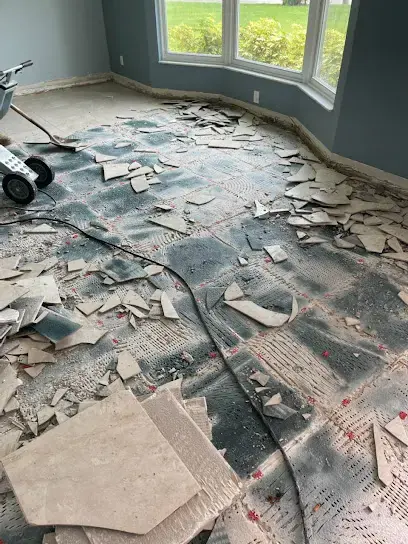
Many Palmetto ranch homes are concrete block on a slab, built from the middle of the last century through the 1980s. The pipes that feed and drain those homes run under or inside the concrete. When one fails, the leak is hidden until the floor tells on it.
Key takeaways
- Older block homes in Palmetto often have copper supply pipes that can pinhole and cast iron drains under the slab.
- Warm spots on the floor, a water meter that moves with everything off and damp baseboards are the classic warning signs.
- A supply leak puts clean water into the slab. A cast iron drain leak puts waste water there, which is handled differently.
- Thermal imaging and moisture mapping let the crew lift flooring only along the wet path.
- Finding the leak is a plumber's job. Drying the slab, walls and flooring is a restoration job.
Why block homes on slabs leak in hidden places
A slab home has no crawl space and no basement. Water supply pipes may run in the concrete, in the walls or in the attic, and drains sit below the floor.
Palmetto's older block ranches, built from mid century through the 1980s, are now decades old. Two failure patterns are common: pinholes in copper supply pipes and cracks in cast iron drains under the slab.
A pinhole is a tiny opening, but it leaks under pressure around the clock. A cast iron drain can crack, corrode or shift, and then waste water seeps into the ground and the slab.
Why pinholes form in copper pipe
Copper can last a long time, but it does not last forever. Over the years, water moving through the pipe can wear the inside of the wall in small spots until a pinhole opens.
Water pressure does the rest. A pinhole under pressure sprays a thin jet that wets the surrounding material, and if the pipe is inside concrete or a wall, the jet is never seen.
Palmetto's older block ranches were built decades ago, so their copper has had a long time to wear. That is a general plumbing pattern, not a promise about any one house.
Warning signs a homeowner can spot
Slab leaks do not announce themselves with a flood. The signs are subtle and easy to explain away.
Watch for any of these:
- A warm area on a tile or concrete floor, which can mean a hot water pipe is leaking
- A water meter that keeps moving when every fixture is off
- The sound of running water when nothing is running
- Damp or stained baseboards, or paint that bubbles at the bottom of a wall
- A musty smell in one room, or a sudden rise in the water bill
- Tile that cracks, lifts or sounds hollow
Supply leak or drain leak: why it matters
The type of leak decides how the cleanup is done. A copper supply pipe leak puts clean water into the slab and the materials around it. A cast iron drain leak puts waste water there.
Waste water is Category 3 and brings cleaning, treatment and sometimes removal of porous materials. The pipe is the plumber's repair, and it should be fixed before drying begins, or the structure will get wet again.
A drain leak can also hide as a slow sewage odor. If a floor drain smells, or a toilet gurgles when another fixture runs, tell the plumber, since both can point to a damaged drain under the floor.
Copper pinhole leaks
Water under pressure leaves a pinhole in a steady stream. It can run for weeks before a damp spot shows.
Cast iron drain leaks
These leaks happen only when something drains, so the signs come and go. A smell of sewage near a floor drain or a bathroom can be the first clue.
How the leak is mapped and the floor is opened
The goal is to open as little of the house as possible. A thermal camera can show a warm streak where a hot pipe is leaking, and a moisture meter shows how far the wet area runs.
Tile or flooring is lifted along the wet path instead of across the whole room. The slab leak water damage page describes the process.
Plumbers use their own tools to pinpoint the pipe. Once the pipe is repaired, drying starts.
Mapping saves money and mess. A cut made in the wrong place can hit a pipe or a wire, and it can leave a hole that has to be patched for nothing.
Once the leak is located, the plumber decides whether to repair the pipe in the slab, reroute it through a wall or the attic, or replace a section of drain.
Restoration waits for that decision, because drying before the repair means the slab can get wet again.
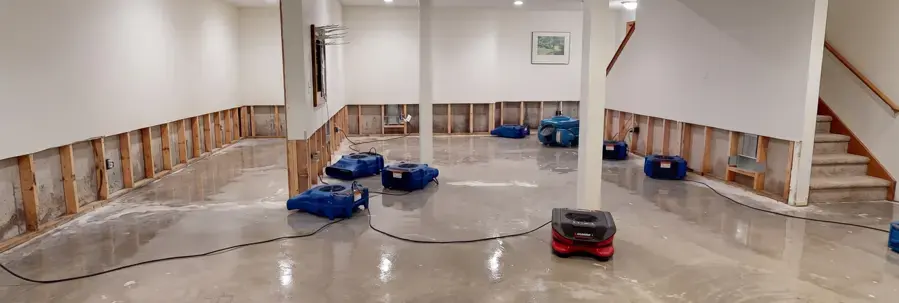
Drying a slab and the walls around it
Concrete is dense. It takes in water and gives it up slowly, so the slab can stay wet for a long time after the leak is fixed.
Wall bottoms, baseboards and cabinet toe kicks sit right on the slab and soak it up. They are opened and dried too.
- Water on the surface is extracted
- Wet flooring and pad along the leak path are removed
- Desiccant dehumidifiers and mats pull moisture from the slab
- Readings are taken again before anything is rebuilt
What happens to flooring and cabinets
Slab leaks wet whatever sits on top of the concrete. Different materials react differently, and the answer decides what comes up.
- Tile usually survives, but the grout and the bed beneath it can hold water
- Laminate and engineered plank swell and cup, and are often removed along the wet path
- Carpet and pad stay wet and are usually lifted
- Cabinet bases and toe kicks are opened to dry the slab beneath
- Baseboards are pulled so the wall bottom can breathe
A burst pipe is a different event
A slab leak is slow and hidden. A burst pipe is fast and obvious. The two can still overlap, since a pinhole can turn into a larger failure.
If water is spraying or pooling quickly, shut off the main valve first. The burst pipe water damage page covers fast failures, and the water extraction page covers the first removal of standing water.
- Slab leak: slow, hidden, found by signs and mapping
- Burst pipe: fast, visible, found by the water itself
- Both: shut off the water and call a plumber
- Both: dry the structure after the repair
What to do if a slab leak is suspected
Do not drill or cut the floor on a guess. A wrong cut can hit a pipe, a wire or the leak path itself.
Shut off the water to see if the meter stops, photograph any stains, and call a plumber to locate the leak. A restoration crew can then dry what is wet while the repair is scheduled.
Questions to ask the plumber and the crew
A slab leak involves two trades, and the work goes smoothly when they share information. A few questions help keep both on track.
Ask the plumber where the leak is and whether it was a supply pipe or a drain. That one answer tells the restoration crew whether the water is clean or Category 3.
Ask the crew how the wet area was mapped, which materials were removed, and how readings will be taken before the floor is closed again. Closing a floor over a wet slab is how the problem comes back.