
Tropical Storm Debby brought rain flooding to Palmetto in August 2024, and the pattern was easy to recognize. The yard filled first, then water found a door threshold, a slab edge or a low garage entry. On flat, low, sandy ground with a high water table, that water does not leave quickly.
Key takeaways
- Flat ground and a high water table keep rain water standing around a Palmetto home long after the storm passes.
- Water that crossed a yard or street is handled as Category 3 flood water, not as a clean plumbing leak.
- Extraction comes first. Flooring, baseboards and wall bottoms are then checked with a moisture meter before drying equipment is placed.
- Concrete block walls and slabs hold moisture for a long time, so readings, not appearance, decide when drying is done.
- Photos taken before anything is moved support the insurance claim and the drying plan.
Why rain water lingers in Palmetto
Palmetto sits on flat, low, sandy ground with a high water table. Rain has little slope to run down and the ground below is already close to full.
During the June to September rainy season, near daily storms can keep the ground wet for weeks. A big storm like Debby lands on top of that already saturated base.
Water then looks for the easiest way in. Common entry points are listed below.
- Door thresholds and sliding door tracks
- Garage floors that sit below the yard
- Slab edges where a wall meets the concrete
- Floor drains and tub drains that back up when the ground is full
Rain water is not always clean water
A leaking roof sends in rain that has only touched shingles and attic framing. Water that flooded in across a yard, a driveway or a street is different. It carries soil, fertilizer, pet waste and whatever else sat on the ground.
Restoration crews treat that as Category 3 flood water. It changes what can be saved: carpet pad and soft baseboard usually go, while sealed hard surfaces can often be cleaned and dried.
The storm and flood cleanup page explains how flood water is sorted and what that means for the work.
What to do before extraction starts
The first steps are about safety and proof, not cleanup. Nothing here needs special tools.
Stay out of standing water if the electrical panel, outlets or appliances may be wet. Water and power do not mix, and the power should stay off until the area is checked.
- Photograph and video the water level, the walls and the contents before moving anything.
- Turn off power to flooded rooms at the breaker if it is safe to reach the panel.
- Lift small valuables, papers and electronics onto dry surfaces.
- Pull up area rugs and move furniture legs off wet carpet to stop stains.
- Do not run a household vacuum on water, and do not use a hair dryer or space heater to dry walls.
Common mistakes after rain flooding
The hours after a flood are stressful, and a few habits make the damage worse. Most of them come from wanting the house to look normal again.
Closing the house up tight is the biggest one. Wet walls and floors need air movement, and a sealed, warm, humid house is the perfect place for materials to stay wet.
- Waiting a few days to call, while carpet pad and baseboards soak
- Running ceiling fans or a household fan with the doors shut
- Putting furniture back on wet carpet or wet floors
- Painting or patching a wall before it has been measured
- Throwing away damaged items before photographing them
How extraction and drying are staged
Drying a flooded home is done in an order. Rushing to the equipment before the water is out only moves moisture around.
The water extraction work comes first, and the structural drying work follows it.
Step one: get the water out
Pumps handle deeper water. Truck mounted extraction pulls the rest from tile, carpet and the top of the slab.
Carpet pad that soaked in flood water is removed, since it cannot be cleaned and dried properly in place.
Step two: open and measure
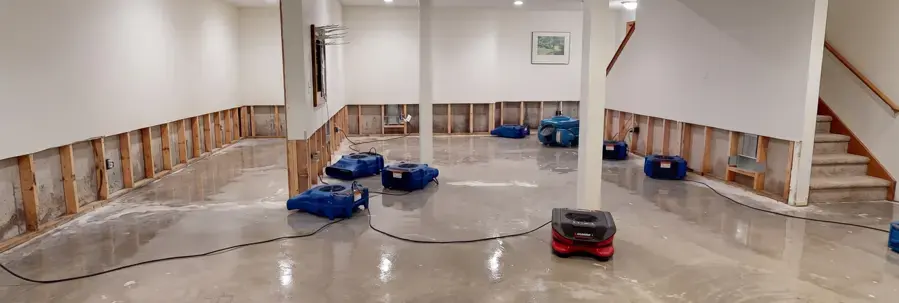
Baseboards come off and small holes are cut at the bottom of wet walls so the cavity can be checked. A moisture meter and a thermal camera show where water traveled behind the paint.
Drywall that wicked flood water is cut a short way above the wet mark. This is called a flood cut, and it keeps the wet material from holding moisture against the framing.
Step three: dry and recheck
Air movers push dry air across wet surfaces and dehumidifiers pull moisture out of the air. In Palmetto's humid subtropical climate the dehumidifiers do most of the work.
The crew returns to take readings. Drying is finished when the materials match the dry reference, not when the room feels dry.
- Wall cavities are checked again, not only the visible surface
- Equipment stays until readings stop dropping
Block walls, slabs and older frame homes
Palmetto has concrete block on slab ranches from mid century through the 1980s, and older frame homes near downtown. Both hold water differently.
Block walls and the slab under them are dense. They take a long time to give up moisture, and a dry looking wall can still read wet at the bottom.
Older frame walls dry from the cavity side, so baseboards and bottom plates matter.
That is why drying plans in the area are based on readings taken over several visits instead of a fixed number of days.
Garages, laundry rooms and attached spaces
Rain water usually reaches the garage first because the floor sits lowest. From there it can move under the door into a laundry room or hallway.
Water in a garage can soak boxes, tools, water heaters and the bottom of shared walls. The wall between a garage and the house is worth checking even if the living space looks dry.
Washers, dryers and freezers sit on the floor and have electrical parts low to the ground. They should not be plugged in or run until they have been inspected.
Rainy season and hurricane season timing
The rainy season runs June to September. Hurricane season runs June 1 to November 30, so the two overlap for the whole summer and part of the fall.
Hurricane Ian passed with outer bands in September 2022. Debby followed with rain flooding in August 2024. Both are reminders that Palmetto's water risk is not limited to the coast.
The Manatee River on the south edge, Terra Ceia Bay, Tampa Bay and Frog Creek all shape where water collects. Bay water is a separate problem from rain runoff and is covered in its own post.
What to record for the claim
Insurance adjusters ask when the water came in, how high it got and what it touched. Notes and photos made on day one answer all three.
A short written list of damaged contents, with a rough age and cost, saves time later. Keep samples of ruined flooring until the adjuster has looked at them.
Neighbors across the Manatee River in Bradenton deal with similar river and rain water, and the same record keeping applies there.